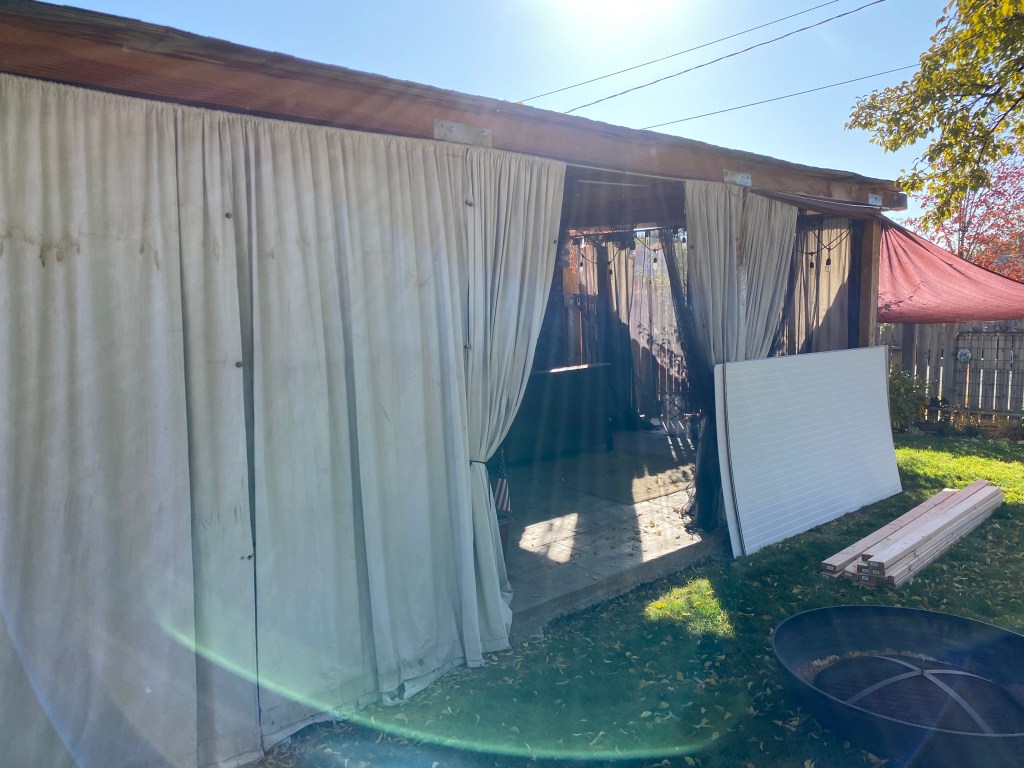
From the beginning of this project I had a basic understanding of the space: this was a paradise on earth. Day 1–just a visit to discuss the project. It was a beautiful fall day, probably about 60 degrees outside. We went to the porch to sit and talk about it. We sat there in peace. I could tell that this sanctuary was wanted all year long. The owner discussed some various things she had tried to keep it warm or protected in stormy weather (wind, rain, snow, etc.). She tried plastic sheeting–that would just tear in extreme weather. She tried canvas curtains–kind of worked, but would blow a lot in the wind (and there’s almost daily wind in this area), it was also damaged from sprinklers and rain. She shared a rough drawing of an idea she had designed.
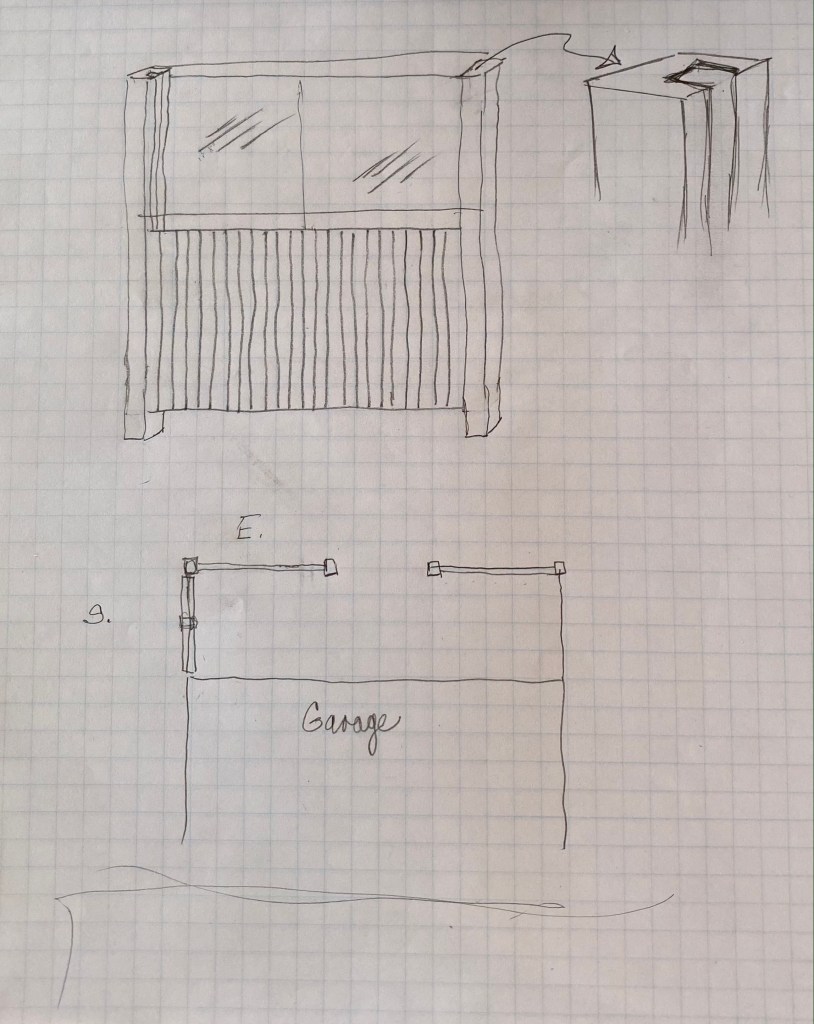
In this first design I could see that she clearly wanted a wall to withstand anything that the weather could throw at it. It was also clear to me that she felt a window would be a way to offer that protection. What seemed incongruous with the design was how to still create the feeling of being outside–this was a wall. We talked more and I could sense that she wanted windows that could be removed to allow free air flow. I instantly thought about pocket doors and how they worked. The problem was that rather than go side to side, we would be better served to have the windows go down into the wall for both storage and protection.
My own drawn-up design doesn’t actually look all that different from what she had drawn up. I don’t have fancy software or interior designers that work for me, but I could envision how the interior wall featured a wainscot on the bottom. In my own mind I could picture an open interior to the wall–a pocket that would allow the window to draw downward.

The next big challenge actually had me thinking for quite some time on how to achieve a draw of the window–meaning, how can these windows be raised and lowered into the wall? I thought of having them on hinges with doors at the bottom that could be opened and the window swings down. This seems inconvenient because couches and other furniture would have to be moved to provide mobile space. I thought I could just have it secured in place with a latch or lock. That could work, but if someone who didn’t know how it works unlatched the windows they would fly into the wall and possibly shatter. Each possible solution kept directing me back to a way to raise and lower it for anyone at any age or in any health condition. This while keeping in mind that the windows wouldn’t be going up and down every day, just a few times each year.
I kept coming back to an idea from another project of mine–block and tackle, or pulleys. In this area of Nevada there are a lot of people who store kayaks and canoes in their garages using pulley systems. I took the basic idea into my plan.


It took a little more configuring to allow an open side track for the windows to be guided up and down. In hind-sight, I think using a wooden track allowed for the metal hardware from the pulleys to get caught in the soft wood. This is a bit frustrating in lowering the windows because they get wedged in the wood. I think the solution might be to use a metal track. I would love to hear any comments on other possible solutions. I had considered only holding the window with hardware at the top of the window, but I felt like that would put too much stress on the window frame and might cause the frame to buckle along the bottom while holding the weight of the plexiglass, especially in the wind.
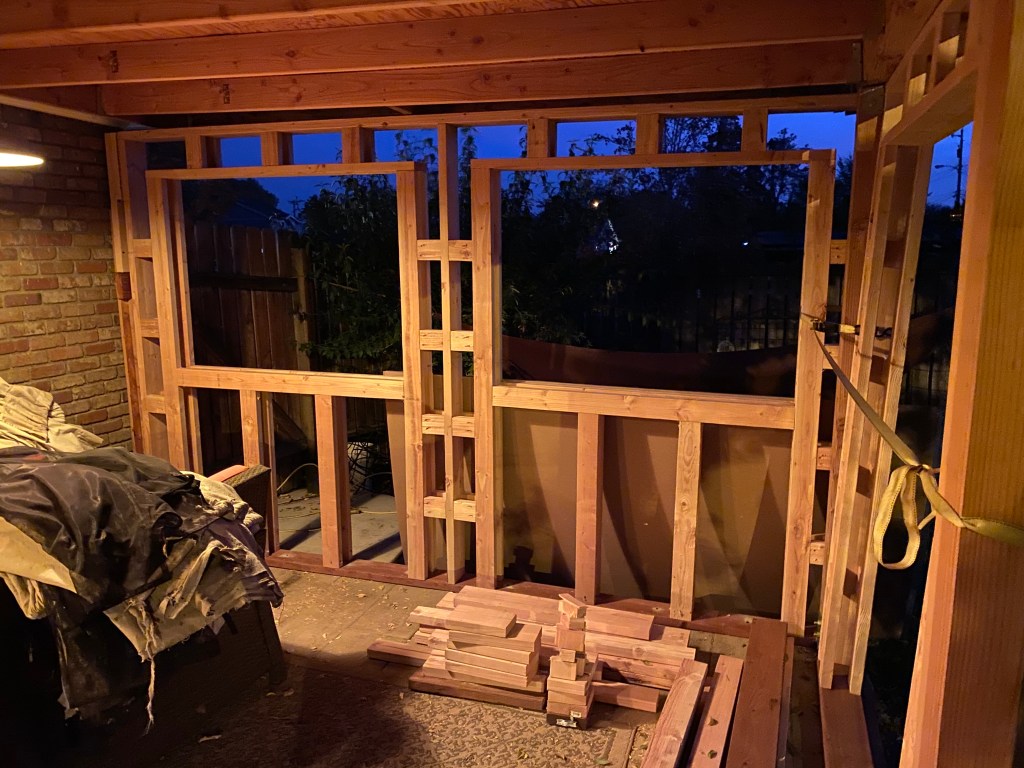

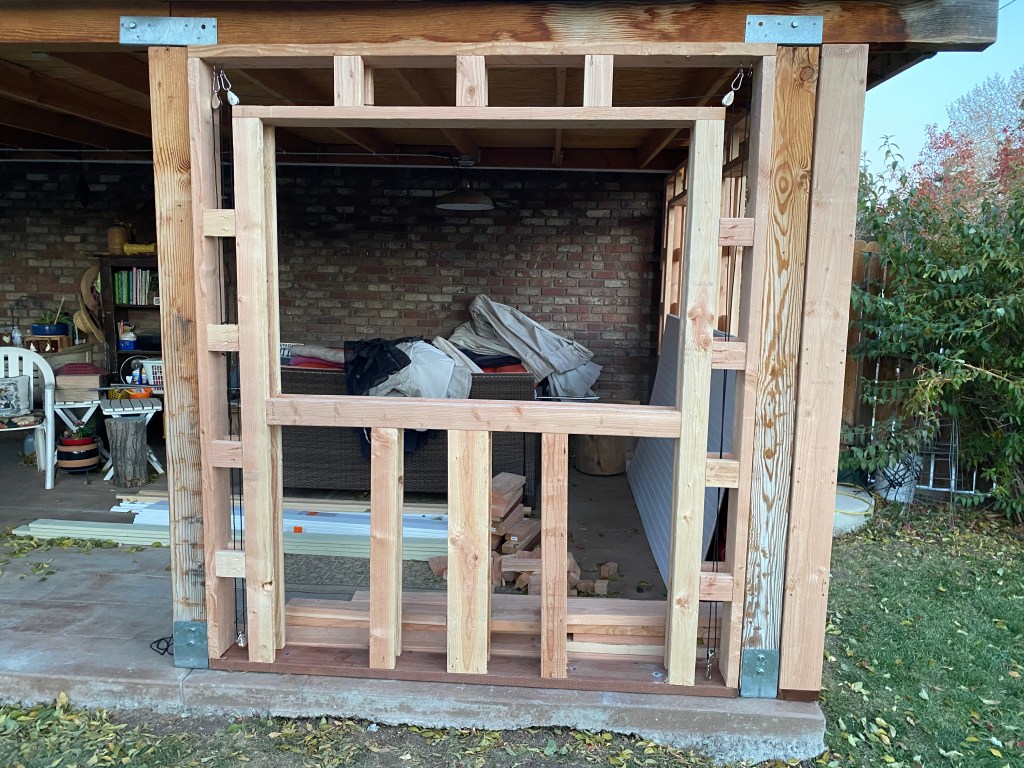

Once the framing was up and the pulley systems were in place, it was time to focus on the windows and enclosing the framing. The owner actually commented on the framing that it looked so symmetrical and patterned almost like Asian architecture that she wondered if there were a way to preserve the look. I hadn’t framed it with that much precision and preferred to cover holes and imperfections in construction. I think a lot of people watch the framing up of homes concerned about a stud that looks slightly misaligned here or there–and to be sure, some of those issues can cause further issues, but on the whole, the framing isn’t supposed to be the attractive part of construction. I was eager to cover it.

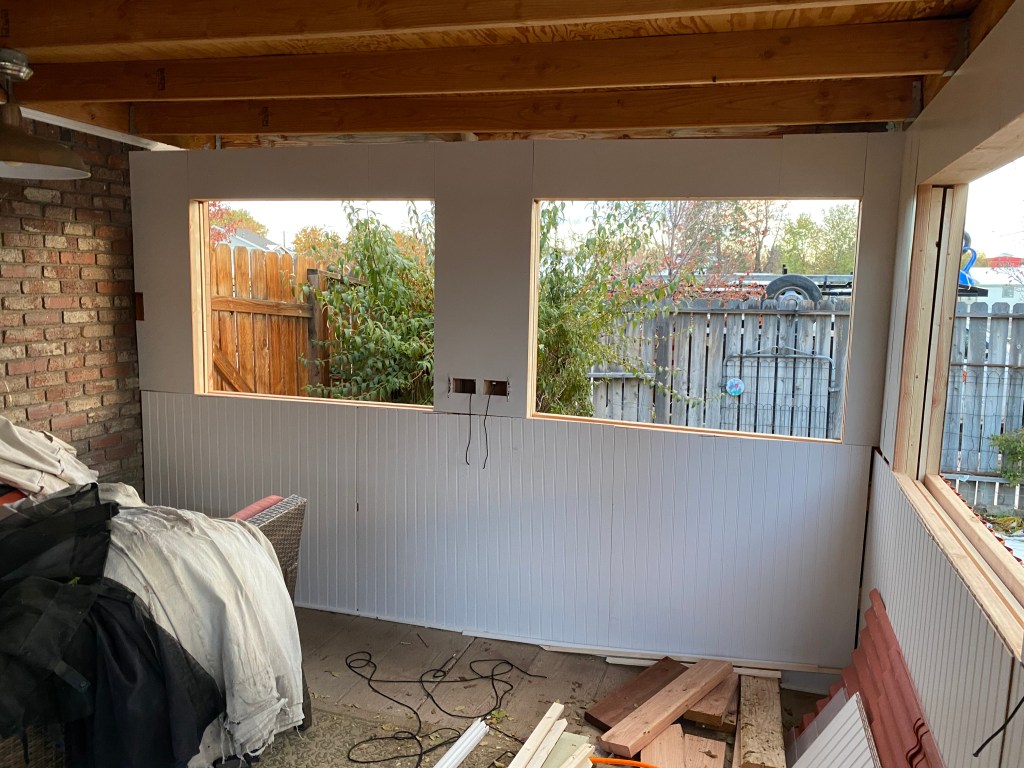
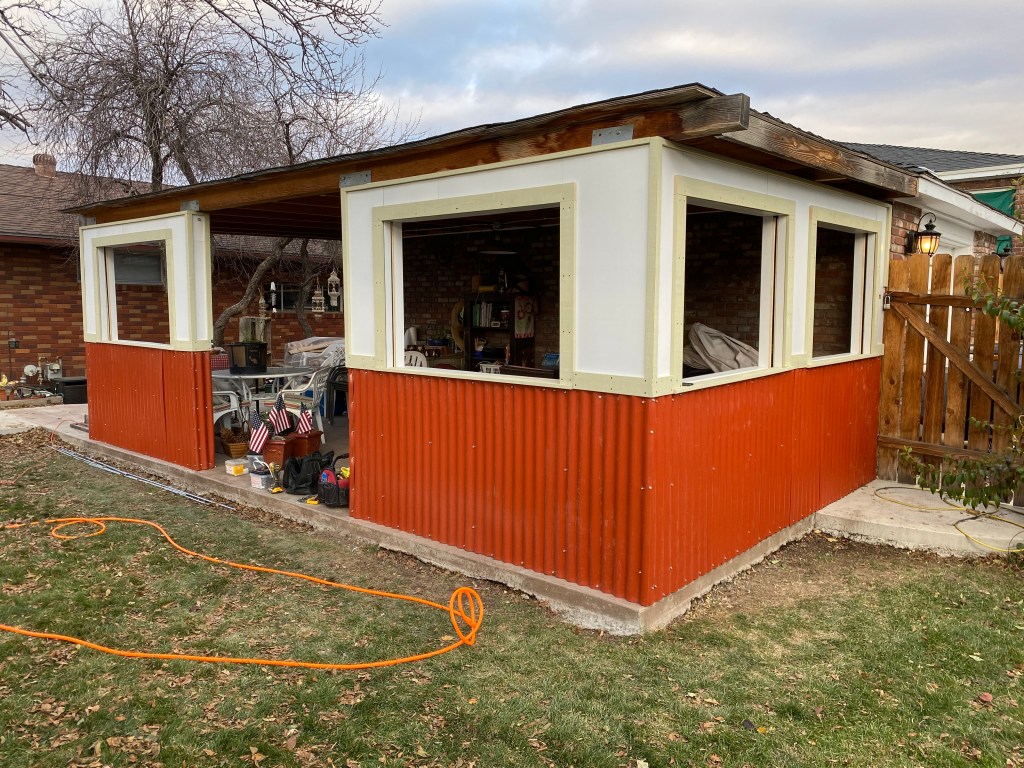

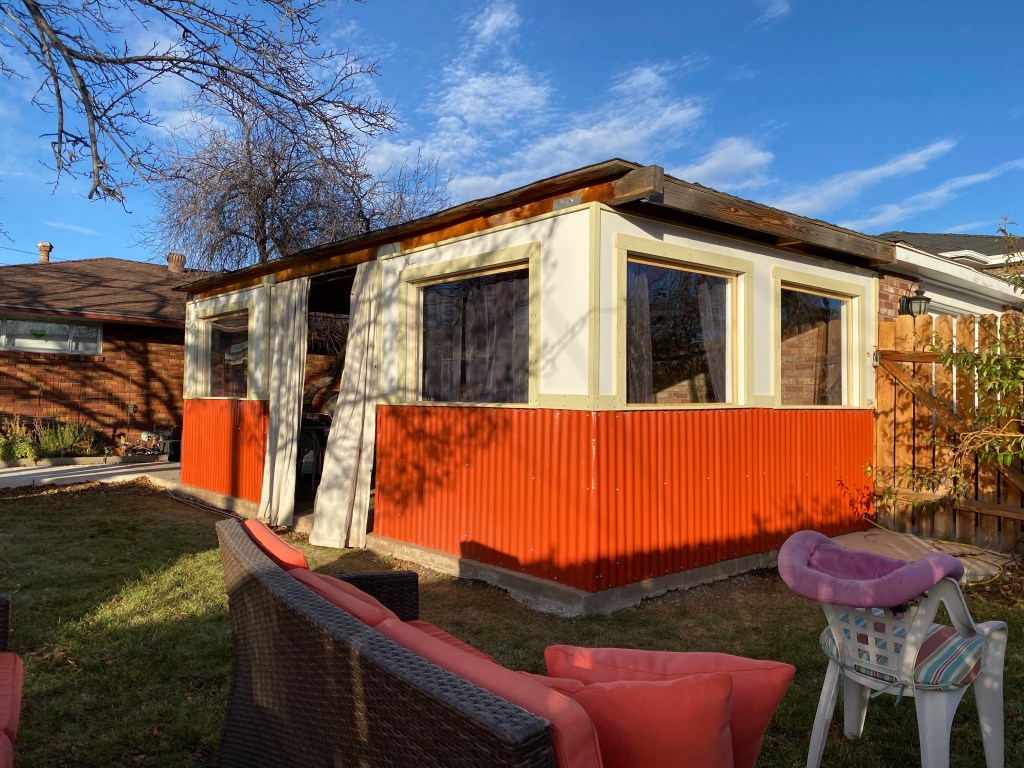
Enclosing the framing was also an interesting challenge. I knew that the interior would have the wainscot with trim along the middle of the wall. I chose a Vermeer board that was just as thick for the top. I guess I didn’t get a good picture of the interior when it was completely done before the curtains went up. I did spend the time to seal any gaps between boards, as well as completely trim out transitions. On the exterior I used the same board for the top portion of the walls. However, on the bottom I used the plastic corrugated roofing material. This was to protect the wall from water damage without having to use brick and mortar, stucco, or some other materials that would be more costly to install.
I will add that I choose to use this red-orange material because it was the closest color to brick, although it could be painted. In fact, my personal preference would have been to paint all of it for both the aesthetics and to protect the material. I mentioned it several times to the owner, hinting that she might paint or have it painted in the future. In the end, I think she got the hint, but said that she was very happy with it the way it was.
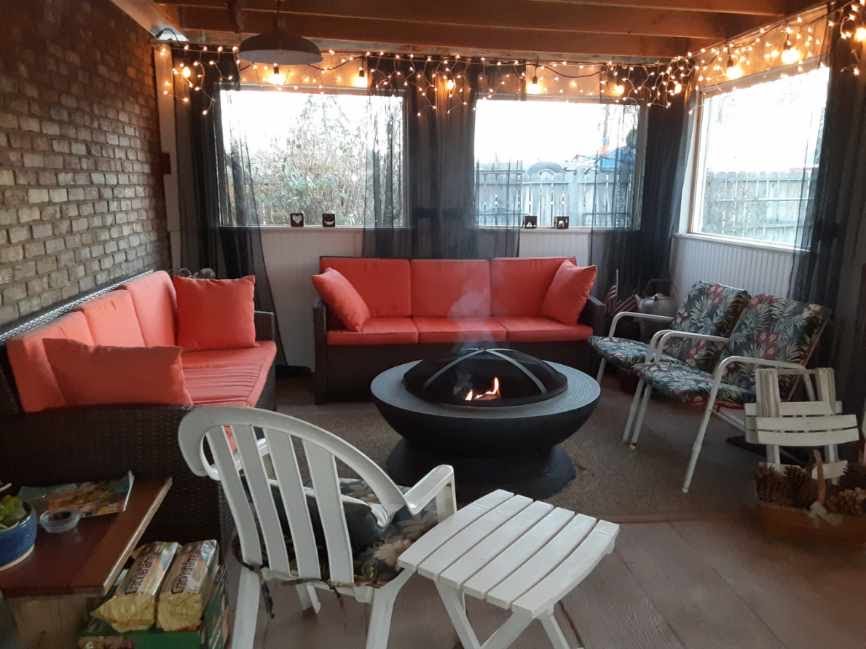
Once the casing was all in place and sealed, the curtains went back up. The owner had used metal electrical conduit for curtain rods, which I thought was a clever solution. On the inside she had some sheer curtains to help lightly shade the porch. She also had this fire log that was rated for spaces like this that have a ceiling–she put this in her fire pit with some seating around it, and strung up the lights.
My last day on the project it wasn’t completely lighted and set up the way she wanted, but we sat on the porch with a fire log burning on a colder afternoon than our first day. It was at that point that I could feel that I had succeeded in preserving the feel of the area. This was her refuge still from being cooped inside the house–especially during COVID19 quarantines. This was a place that could be enjoyed all year long. This was her paradise on earth.
 Sentinel Directions Property Care